Welcoming New Patients & Emergencies!

A missing tooth can change more than your smile. You may avoid chewing on one side, hesitate during conversations, or wonder whether nearby teeth will shift. Choosing a replacement begins with understanding your needs and options.
Dental implants in Payson can replace missing tooth roots and support replacement teeth. They require planning, surgery, healing, and ongoing care. At Anderson Dental Group, an implant consultation provides an opportunity to discuss those steps before committing to treatment.
What Makes an Implant Different From Other Replacements?
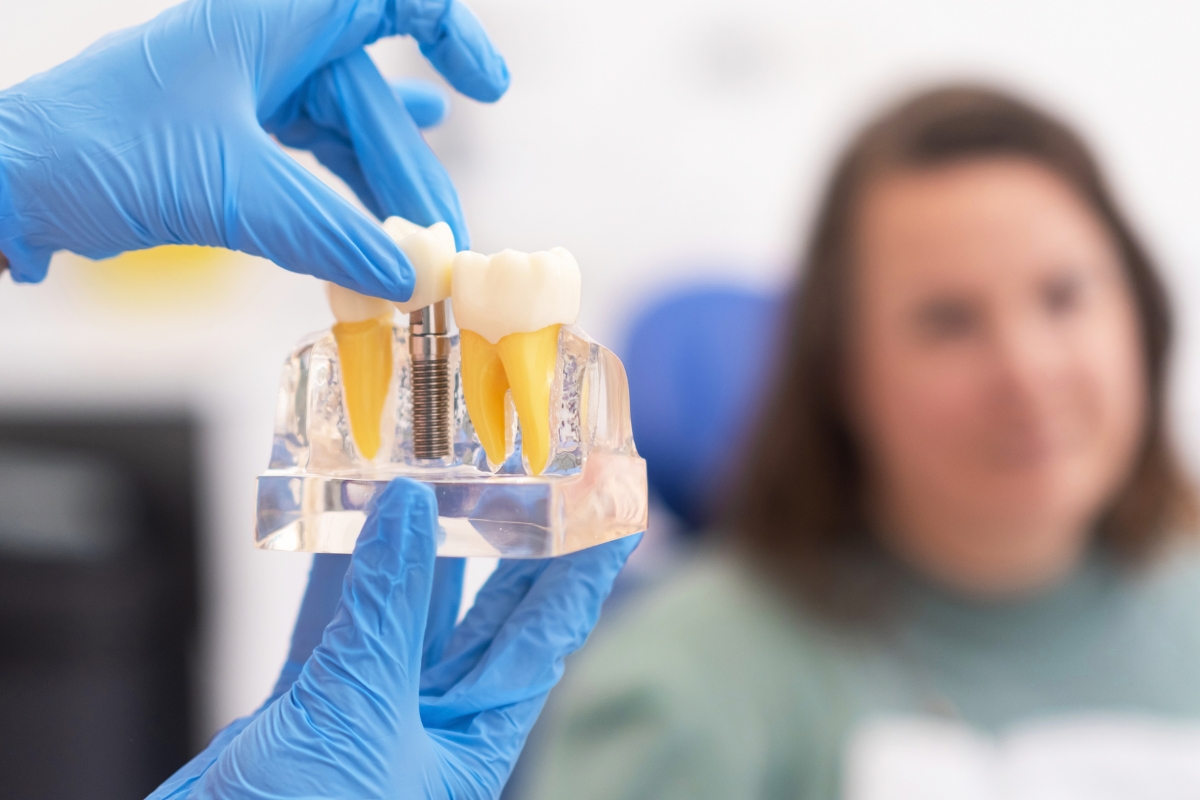
An implant sits within the jawbone. A connector and restoration, often a crown, complete the replacement. A traditional bridge relies on neighboring teeth for support, while a conventional removable denture rests on oral tissues.
These differences matter when considering daily routines. Someone replacing one tooth may want to preserve the adjacent teeth. Someone struggling with a loose denture may prioritize stability. Neither concern automatically makes an implant the right choice, but both belong in the conversation.
Who Can Consider Dental Implants?
The dentist evaluates gum health, bone support, medical history, and the space available for the restoration. Age alone does not determine eligibility. Healing capacity and the condition of the mouth matter more.
Tell your dentist about tobacco use, diabetes, medications, previous surgery, and any history of gum disease. Do not stop prescribed medications yourself. Your dental and medical providers may need to coordinate parts of your care.
A lack of bone does not always rule out treatment. Additional procedures may be considered, but they can change the timeline and cost. Ask what the examination shows, what remains uncertain, and whether another replacement would offer a more predictable result.
What Happens During the Implant Process?
Examination and Planning
Your dentist examines your mouth and reviews imaging when indicated. Planning includes the future tooth’s position, the surrounding anatomy, and whether preliminary care is needed. Anderson Dental Group describes using X-rays or three-dimensional imaging during implant evaluation.
Placement and Healing
The implant is placed surgically. Bone then heals around its surface, creating support for the replacement tooth. This process takes time, and the final restoration may need to wait until healing is adequate.
Restoring the Tooth
Once the implant is ready, the restorative components are fitted. The dentist checks how the replacement meets the opposing teeth and explains cleaning around it.
How Can You Plan Around Multiple Appointments?
For patients traveling from Star Valley or Pine, knowing the sequence of visits can make scheduling easier. Ask which appointments involve treatment, which are healing checks, and when the expected schedule might change.
Do not arrange major travel around an assumed completion date. Healing is biological, and a calendar estimate is not a promise. Get instructions about whom to contact if something changes between appointments.
Useful questions include:
- Will I need an extraction or other treatment first?
- What can I eat during each recovery stage?
- Will medication or sedation affect driving?
- What follow-up visits are included in the estimate?
What Benefits and Risks Should You Weigh?
Implants can provide stable support for chewing and may avoid reshaping neighboring teeth for a bridge. However, they involve surgery and do not succeed in every case.
Possible complications include infection, damage to nearby structures, failure to integrate with bone, and problems with the restoration. Risk depends on the site, health history, treatment, and maintenance. Ask your dentist which risks apply to your situation.
Consider the full treatment estimate, not simply the implant post. Imaging, preparatory procedures, the connector, the crown, and future maintenance may be separate items. Request a written explanation so you can compare options fairly.
How Do You Care for an Implant?
An implant cannot develop a cavity, but the tissues around it can become inflamed or diseased. Daily cleaning and professional monitoring remain necessary. Ask for a demonstration using tools appropriate for your restoration.
Report persistent bleeding, swelling, discomfort, or movement. Avoid treating a loose component as something that will tighten itself. A prompt assessment can identify whether the issue involves the restoration, surrounding tissues, or implant support.
Make Room for Comfortable Eating Again
Anderson Dental Group offers implant consultations in Payson. Call 928-474-4581 to discuss missing teeth and request an evaluation. A clear plan can help you understand your options, anticipated appointments, and responsibilities before treatment begins.
Frequently Asked Questions
Am I Too Old for Dental Implants?
There is no universal upper age cutoff. Your dentist considers your health, bone, gums, and ability to maintain the restoration. An individual examination is more useful than deciding based on age alone.
Can I Get an Implant Immediately After an Extraction?
Sometimes, but immediate placement is not appropriate for every site. Bone condition, infection, and the ability to stabilize the implant influence the decision. Ask whether placement and restoration will occur in separate stages.
Will an Implant Last Forever?
No outcome can be guaranteed. Implants may function for many years, but gum disease, healing problems, and mechanical wear can affect them. The attached crown or other components may eventually require repair or replacement.
Are Dental Implants Covered by Insurance?
Coverage varies. Ask for a written estimate and a review of your specific benefits. Confirm deductibles, annual limits, exclusions, and which treatment stages are included before scheduling care.


