Welcoming New Patients & Emergencies!

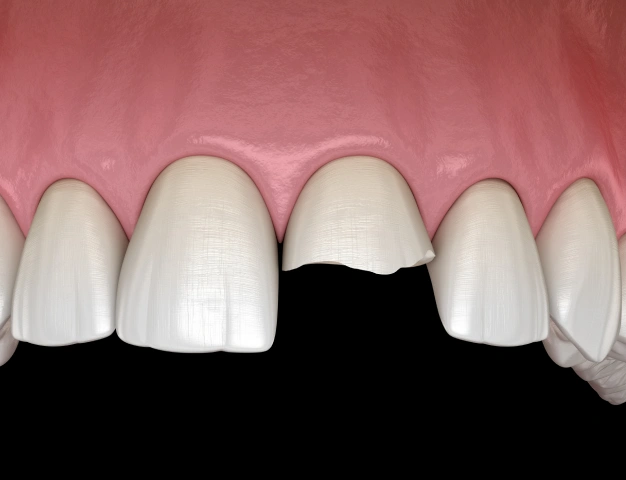
Repair Dental Damage and Restore Your Smile
A chipped or broken tooth might cause alarm, but it is a very common occurrence and can be fixed by your dentist. Just book an appointment with them as soon as you can, and they'll gladly take care of the rest.
Broken teeth vary in the extent of the damage, but many can be repaired within a day. Occasionally, severely broken teeth can take a few visits to fully resolve, but a small chip is easily taken care of during a single visit. You need to talk to your dentist to know the exact amount of work needed to repair a break or chip.
Common Causes of Chipped and Broken Teeth
How can you chip a tooth? It might happen when you're chewing on some hard candy, popcorn or seeds. Broken and chipped teeth can also occur if your mouth receives a blunt force, such as during a fall or in contact sports. It's the reason many athletes have to wear mouth guards and why hockey players are especially notorious for getting broken teeth! Chipped and broken teeth are some of the most frequent causes of dental visits, so dentists are more than used to these situations.
Whatever the cause of a broken or chipped tooth, we know that the experience is anything but enjoyable. This is especially true when the breakage impacts your front teeth. If you're dealing with a broken or chipped tooth, don't worry. Your dentist has all of the tools to solve the problem and get you smiling like it never even happened.
Recommended Treatments
There are multiple ways to treat a broken or chipped tooth. The treatment your dentist chooses depends on the individual chip or break, but most of these dental problems are generally fixable in one visit. Here are a few helpful things you can do while you're waiting to see the dentist:
- Keep the tooth area as clean as possible: Since a tooth chip inevitably damages your tooth's enamel, you need to clean and protect the area as best you can in the meantime. Remember to brush and floss your teeth after every meal to keep bacteria from multiplying in the area and to keep pieces of food out of there as well. It's also a good idea to travel with dental floss picks just as an extra precaution.
- Eat soft foods: If you have a broken tooth that's causing you pain, try your best to eat only soft foods and take some over-the-counter acetaminophen. Rinsing your mouth with salt water may also help slightly with the pain as well as cleaning out any bacteria.
- Cover any sharp spots of the tooth: Sometimes, a tooth breaking can leave a sharp or jagged edge in your mouth that can scratch on the soft tissue around it. If you find yourself in this situation, take a little bit of wax and put it on the sharp edge until your dentist is able to help you.
Once you are able to make it to the dentist's office, they may recommend one of the following treatments for your chipped or broken tooth.
- Filling: Dentists will often choose to fix a chipped tooth using a filling procedure. A filling is a way that dentists can restore teeth when enamel is missing or infected. It can be either metal or tooth-colored. If you chip a tooth, the dentist will simply remove any decay and literally "fill in" the area with the filling option you choose.
- Bonding: Similar to a filling, a tooth bonding procedure is typically used when the tooth damage happens to front or visible teeth. It's a process where the dentist adheres a tooth-colored resin to the broken tooth and hardens the resin with a UV light after shaping it.
- Crown: Crowns are usually reserved for instances where a large portion of enamel is broken off. For this procedure, the dentist gently removes any decay, and sometimes the remaining tooth surface, and places a tooth-shaped crown on top. This may also require root canal therapy depending on the extent of the decay.
Crowns can be made from various materials, and each one has its own benefits. - Dental Veneer: A dental veneer is a procedure where a thick layer of tooth-colored resin is glued to a tooth's surface. It's shaped to compensate for the break in the tooth and is popular in repairing front teeth that have been damaged.